Open-Source Permaculture

Here are some really cool resources for open-source technology for farming and permaculture:


 OpenFarm.cc – Openfarm is an in-development webapp that might be the wikipedia of farming and gardening.  They’re creating a user-updated site (like Wikipedia) that will allow people to populate info about plants that they’re familiar with.  There’s even sections for permaculture-specific growing info.  This looks like it’s going to be really cool once some more of the plant information is populated.  You can get involved with the development of the site on their OpenFarm.cc Development Forum.


Open Source Ecology – Open source ecology is the group behind the Global Village Reconstruction Set, a DIY guide for building everything you’d need to restart civilization.  Check out the TED talk about the project here:


Farmhack.net – Farmhack is a community where farmers post “hacks” or technology that they’ve developed to farm easier, or cheaper.  Some cool inventions include the Farm Bicycle, and the Culticycle, shown below.

Farm Bicycle:

Culticycle:


Finally, here’s an interesting video about creating an open-source permaculture design method.  I can see how this type of thing might be useful for experienced permaculture designers and also for people who haven’t ever heard of permaculture.  It encompasses many permaculture concepts and techniques, and it could act as a guide for things to consider when developing permaculture systems:

Follow Up: Earthship Building in Bristol, Pa

IMG_6013

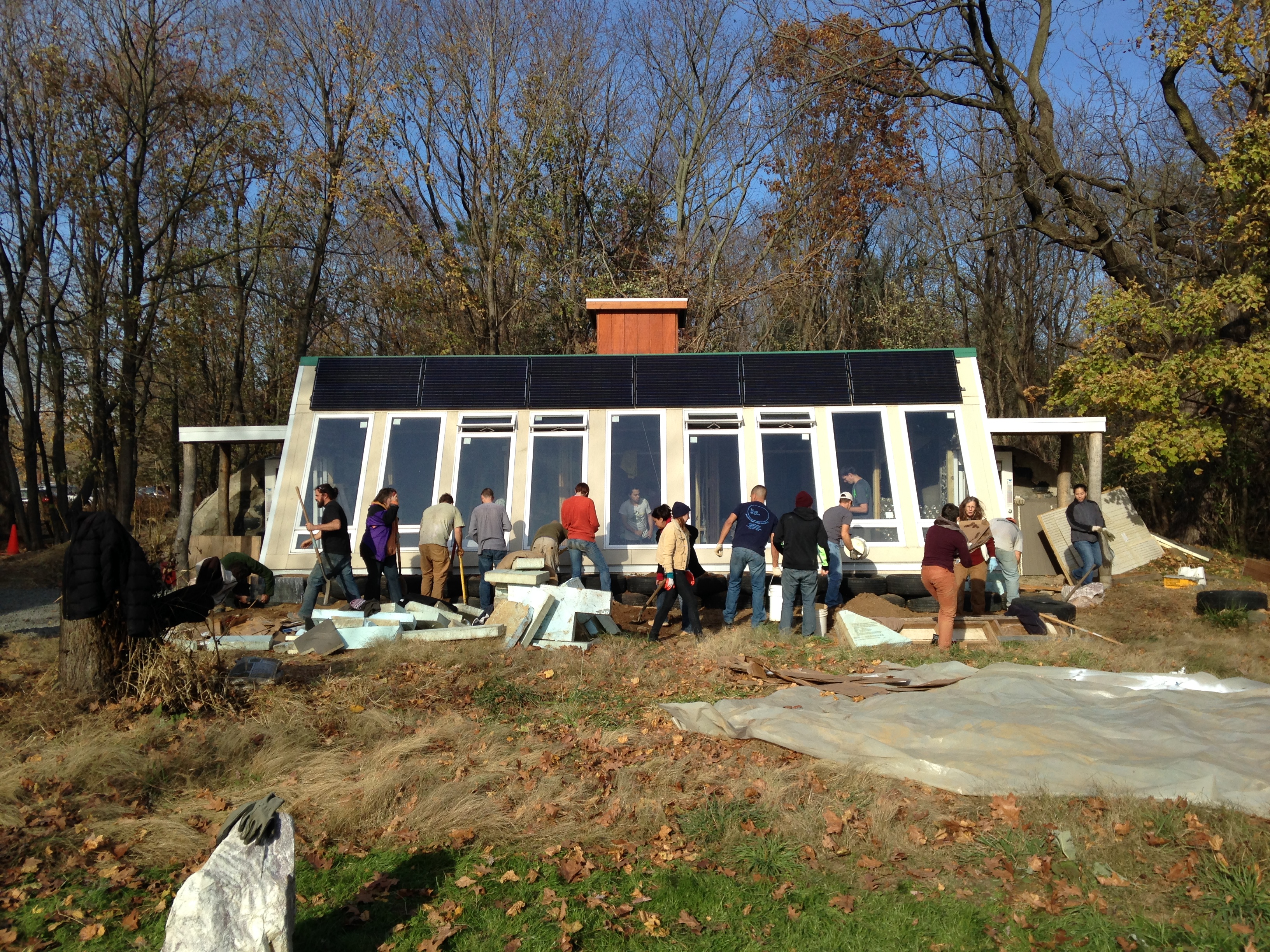
On November 22.23, Earthship Biotecture hosted a workshop in Bristol, Pa to teach participants about building Eartships.  About 50 people volunteered either one or both of their weekend days to help with the construction of this earthship at Silver Lake Park.  This is a structure that will be completely off-grid, harvesting rainwater and solar energy, and passivly heating the building.  It’s walls are made from tires packed with dirt, aluminum cans, glass bottles, and concrete.   This type of building is very cheap to build, and is much more resillient and durable than most buildings.

Here’s a walkthrough of the structure from Sunday:

IMG_5994

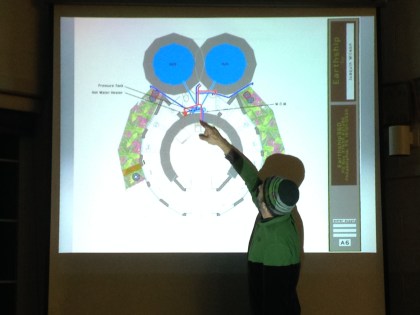
A schematic of the water management system in an eartship design.

IMG_5999

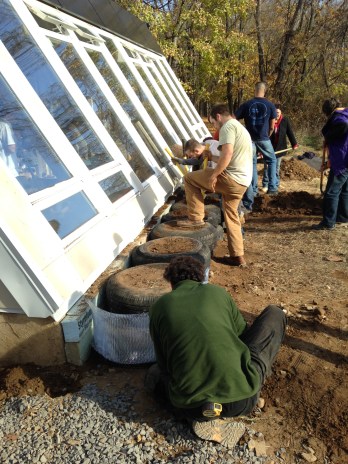
One example of an in-process filter for an outdoor planter.

The class was Saturday and Sunday, with a lecture on Saturday night focusing on water management.  I had heard about earthships in the past, and thought I understood the basic concepts, but the lecture on Saturday night opened my eyes to how intricate the design really is.  Water that is collected from the roof of the structure is stored in large, underground cisterns.  The water from these cisterns is filtered, and gravity fed into the building where it is used for drinking water, sink water, and shower water.  After being used, it is filtered through an in-ground planter that is in the greenhouse section of the building near the large, south-facing windows.  After feeding nutrients to the plants growing here, it is used again in the toilets.  From the toilets, it is flushed outside to several more in-ground planters where the blackwater feeds nutrients to more plants.  Food is not typically grown in the blackwater planters, but the greywater planters thrive as food sources for the inhabitants.  In the presentation from Saturday evening, there were examples of beautiful kitchens with lush gardens integrated as part of the home.

IMG_6011

Pounding dirt into tires to create a rammed-earth structure

IMG_6026

After ramming the tires with earth, we created a concrete and stone trim

IMG_6025

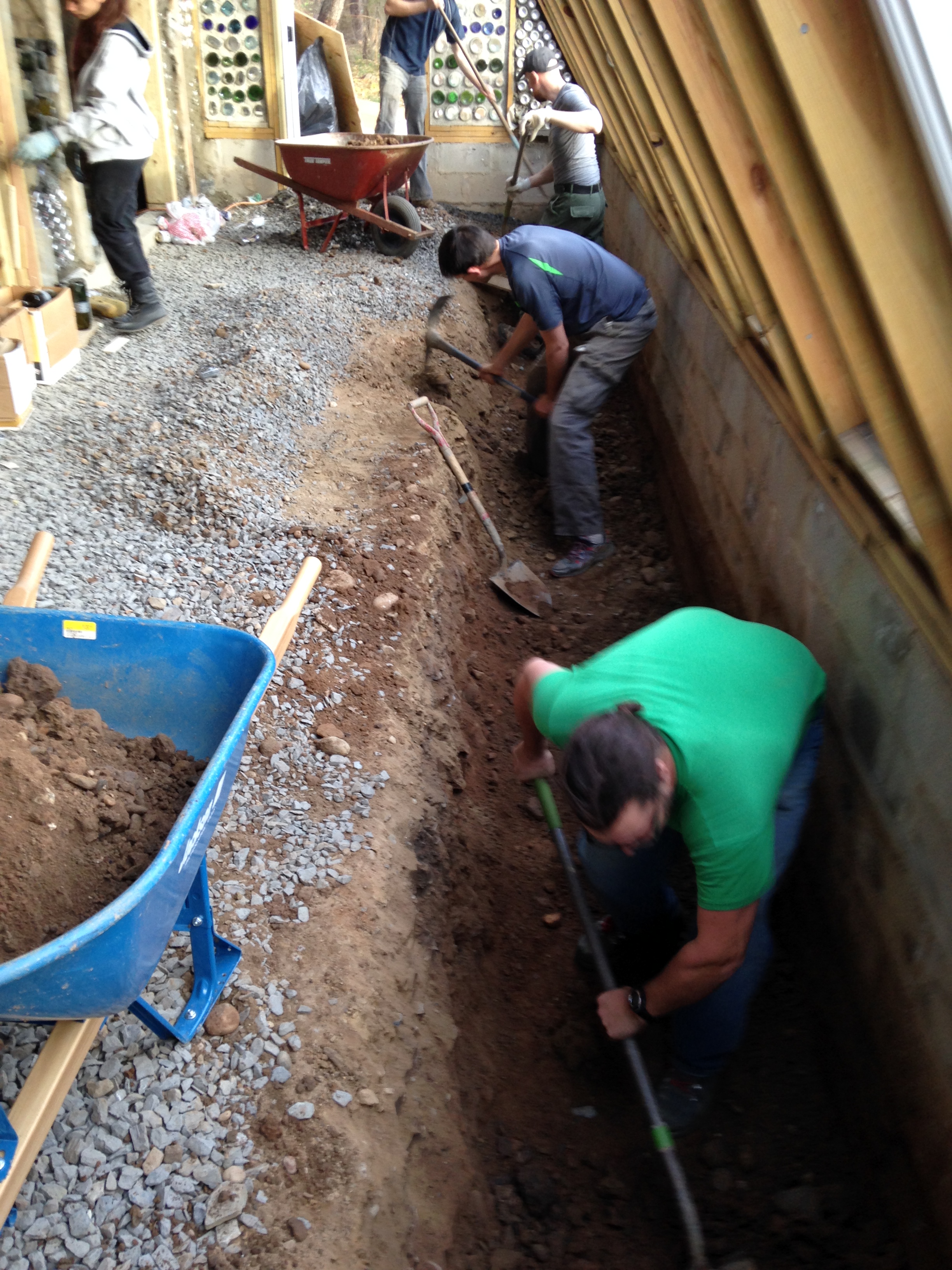
A lot of dirt has to be moved when building earthships.

We were burying the water cisterns on Sunday, and we needed to move wheelbarrel after wheelbarrel of dirt to the top-rear of the building, where the cistern sits:

IMG_6023

Digging large food garden planters inside the south-facing glass windows.

There’s also an earthship currently being built in West Philly.  They could use your support: https://www.indiegogo.com/projects/west-philadelphia-earthship-demonstration-project

IMG_6009

Glass bottles and concrete make funky patterns in the walls, and insulate against cold weather.

Most people today buy their homes with a mortgage that they will need to pay off for 20-30 years.  Imagine, rather than taking on this debt, if a community got together and built homes for each other.  Spending time on the weekends to work on each others homes, a small community of earthships could be constructed in a few short years.  This community would then be self-sufficient, off-grid, and mortgage-free.  This would take a lot of time, but maybe as a society we need to re-prioritize how we spend our precious free time.  Maybe sacrificing some time (and sweat) to help one-another live more resilient lives is exactly what our society needs.

The Permaculture Action Tour with The Polish Ambassador

On November 6th, The Polish Ambassador and his crew of activist musicians brought the funk to Philly for their Permaculture Action Tour.  Joined by Mr. Lif, and Ayla Nereo with their unique musical styles, and Liminus providing live visuals, The Polish Ambassador is also travelling with a crew of Permaculture activists, spreading sweat and positive messages to communities all over the US.  It started with a IndieGoGo campaign to fund their idea for a music tour that left behind a positive footprint in each community they visit.  Their mission is to spread the ideas of permaculture and regenerative living to their audience, engaging people who come to enjoy their music, and inspiring them to participate in making their community a better place.  The tour is over now, but for six weeks they travelled across the country organizing community volunteer days to plant permaculture-style gardens, reclaiming abandoned lots for guerilla gardens, and teaching their fans about living a regenerative lifestyle.

Ryan Rising seemed to be the resident permaculture expert on the tour, and before the show in Philly, Ryan gave a 20-ish minute presentation on what they’ve done so far with the tour, planting permaculture gardens, guerilla gardening, and spreading information about permaculture.  Then, he invited Robyn Mello to speak about the Philly Orchard Project (POP), and their ongoing work in Philadelphia to plant food forests and educate people about permaculture.  POP does amazing work organizing volunteers to plant trees, and help with city gardens and farms, and even holds workshops on all kinds of awesome topics related to permaculture.   Paul Glover, another Philly activist for regenerative living and recent candidate for PA Governor, spoke about Car Free Cities.  Imagine, in a very possible future, a Philadelphia where all the streets are transformed to bike paths, public transportation, and green space; farms, gardens, and parks running down every street.  It sounds like paradise to me.

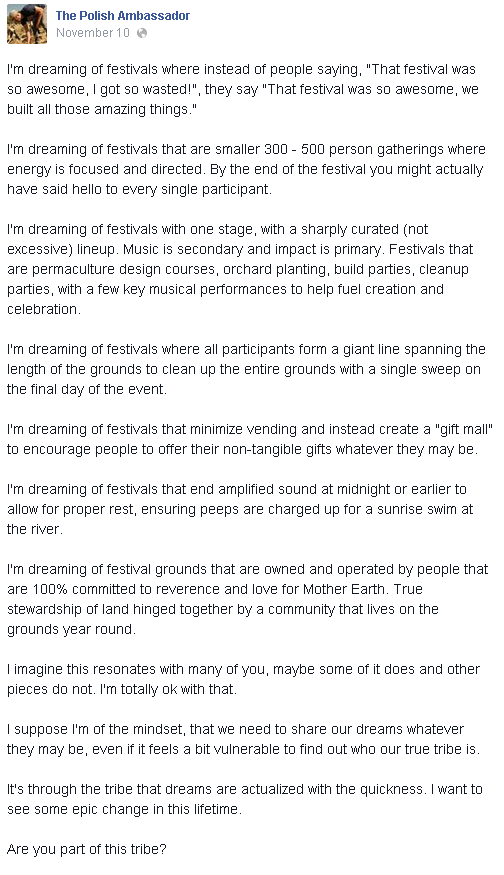
Some of The Polish Ambassador’s fans have reacted negatively on the musician’s facebook fan page.  Some think that they’re neglecting the music aspect of the tour by focusing on their permaculture message.  The Polish Ambassador responded in a Facebook post:

YICsbDY


Here’s a video that I took during the concert.  Ayla Nereo and Mr. Lif improvised, using a loop pedal, collaborating with a beatboxer from the crowd, and created this awesome freestyle experience:

Eastern Pennsylvania Permaculture Convergence

  photo 2
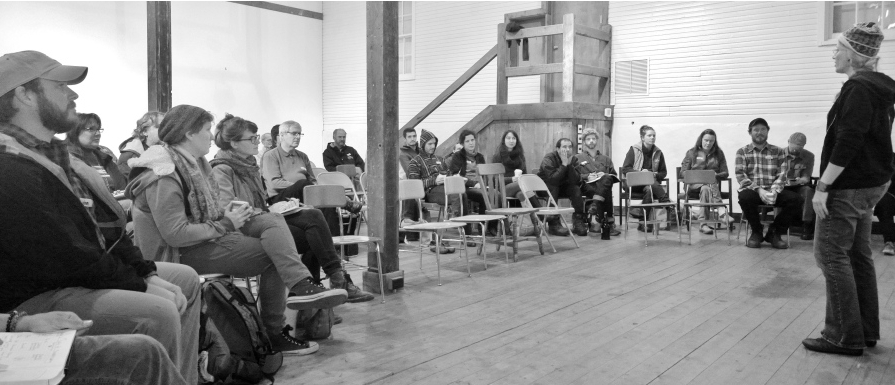
The first ever Eastern Pennyslvania Permaculture Convergence took place a few weeks ago in Lilitz, Pa.  Nearly 60 people came out to take part in the event at the Millport Conservancy.  I wasn’t able to attend, but the way my friend Dana Herman describes, it sounds like it was a great event:
The convergence was very interesting from my standpoint, I haven’t been in a permaculture gathering before so it kinda felt like I was in a different country, a kind country. The group used new meanings for familiar words like, popcorn for throwing out ideas, and after stacking when they would identify individuals who wanted to make a longer point. Also some interesting hand signals to show you were agreeing or not to what the speaker was saying, another set of signals to point out if person went off topic or if another wanted to make a specific comment back to that point the speaker made. The process in getting all the ideas down was very organized and at the same time organic.  When time was up, the organizers told us we could have lunch while they took all the boards out of the room to compose them in groupings.
 
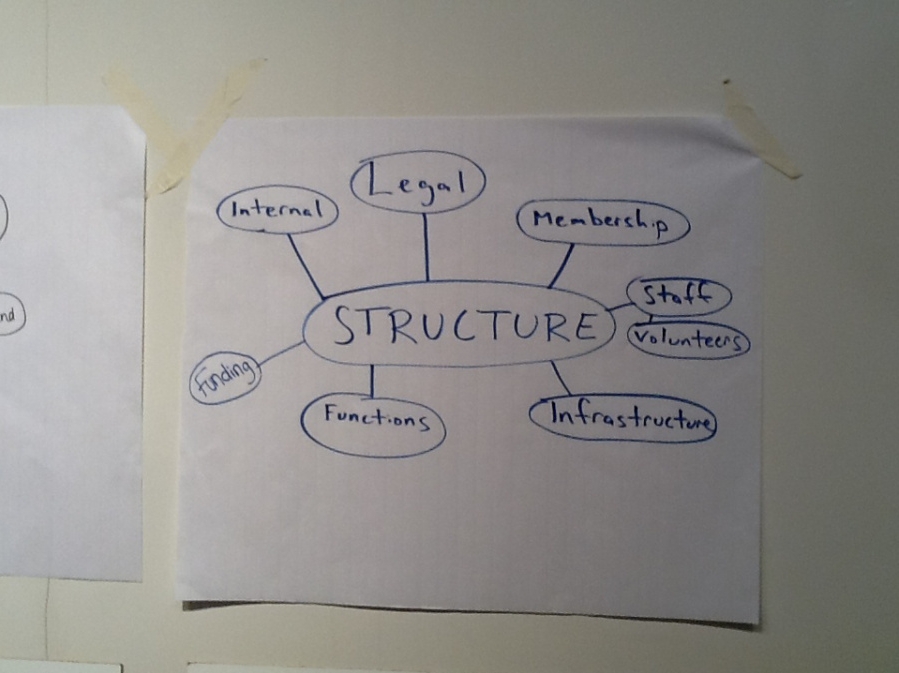
After lunch they came in and placed 6 posters up on the wall with bubble off shoots of ideas.  Outreach, Public Relations, Programming, Funding, Vision/Mission, and Structure.
The plan was for us to decide which one spoke to us most and when they called out the name of that poster someone was to come up (one who wanted to be acting leader) get the poster and go to a different area of the room and those interested would follow.  Structure had Legal, Membership, Staff/Volunteers, Infrastructure, Functions, Funding and Internal and we barely got the first 3.
 
structure
The goal now is that each groups leader take what was discussed and type it up into a format and post within the Worldpress.com [site] and that we (the rest of us) work on this for the next month or so until a new meeting is scheduled.
-Dana Herman
There are a few other reviews of the event on the blog, click on the names below for those reviews.
photo 1
Those of us not able to attend the convergence are asked to join one of the Working Groups to join the discussion.
Here’s the site for the convergence: easternpennpermaculture.wordpress.com
For more information about the convergence, contact susq.pc@gmail.com.

Biochar Class at Awbury Agricultural Village with Dale Hendricks

IMG_5892

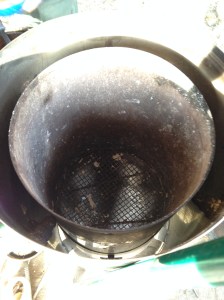
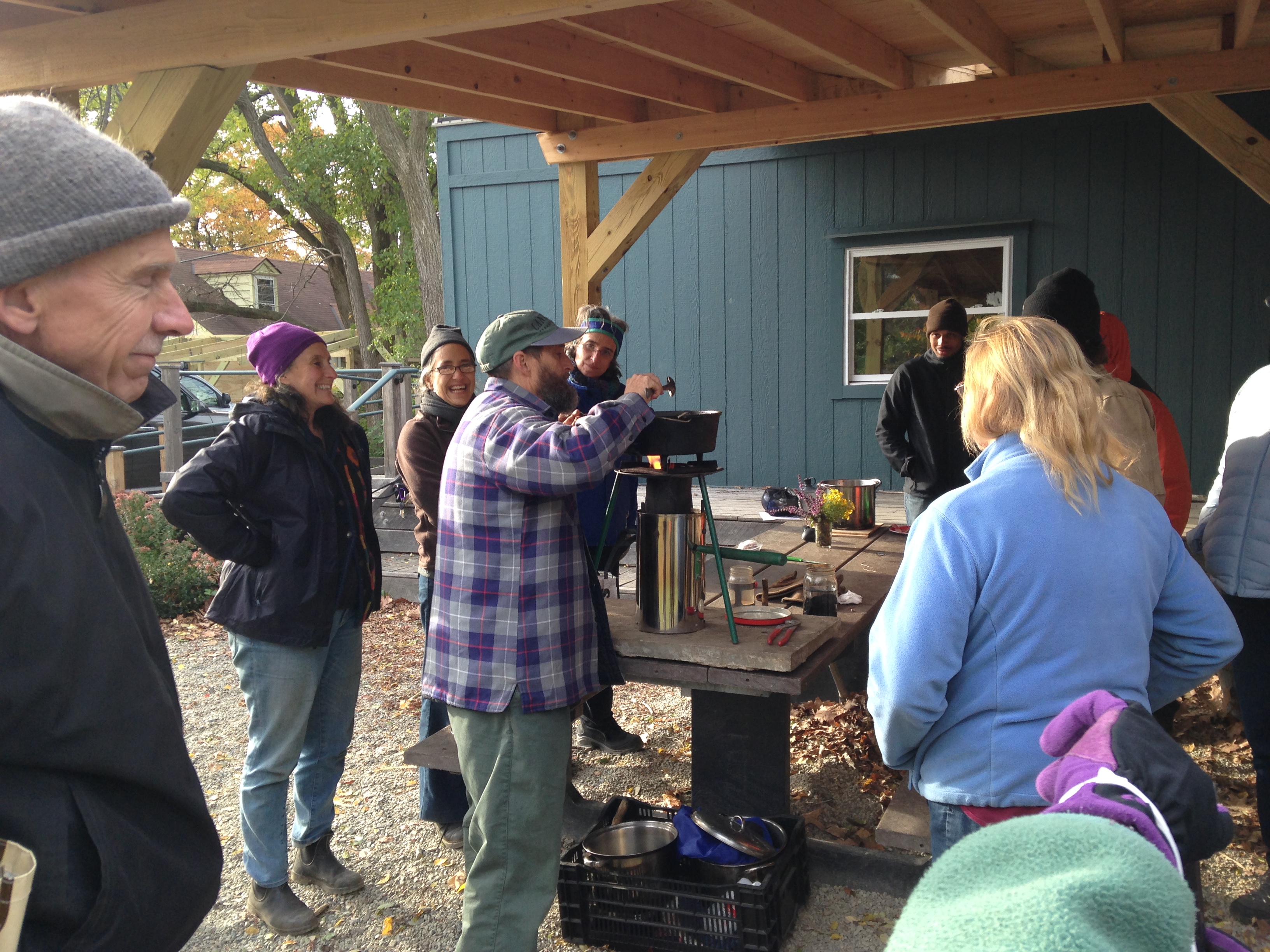
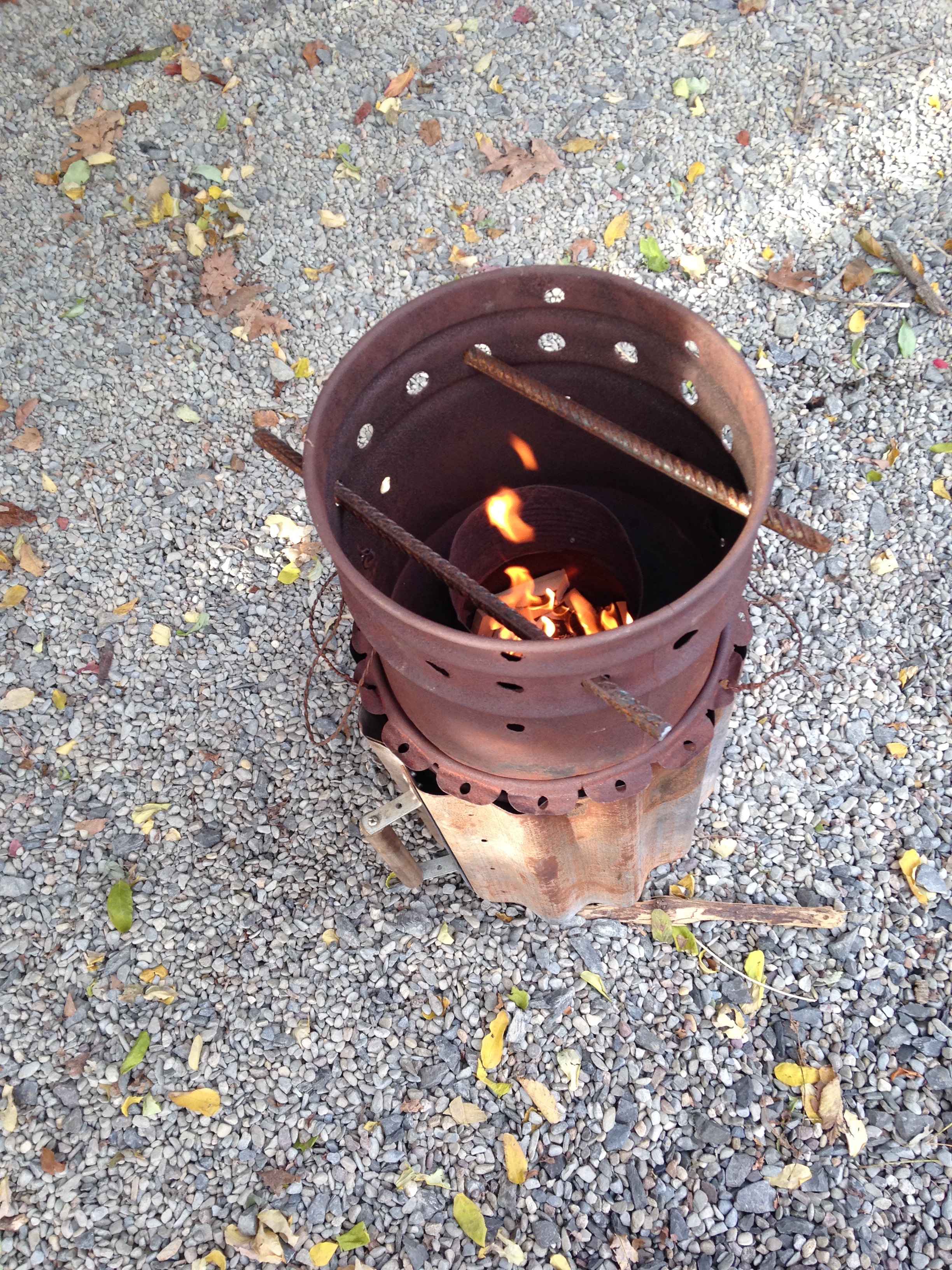
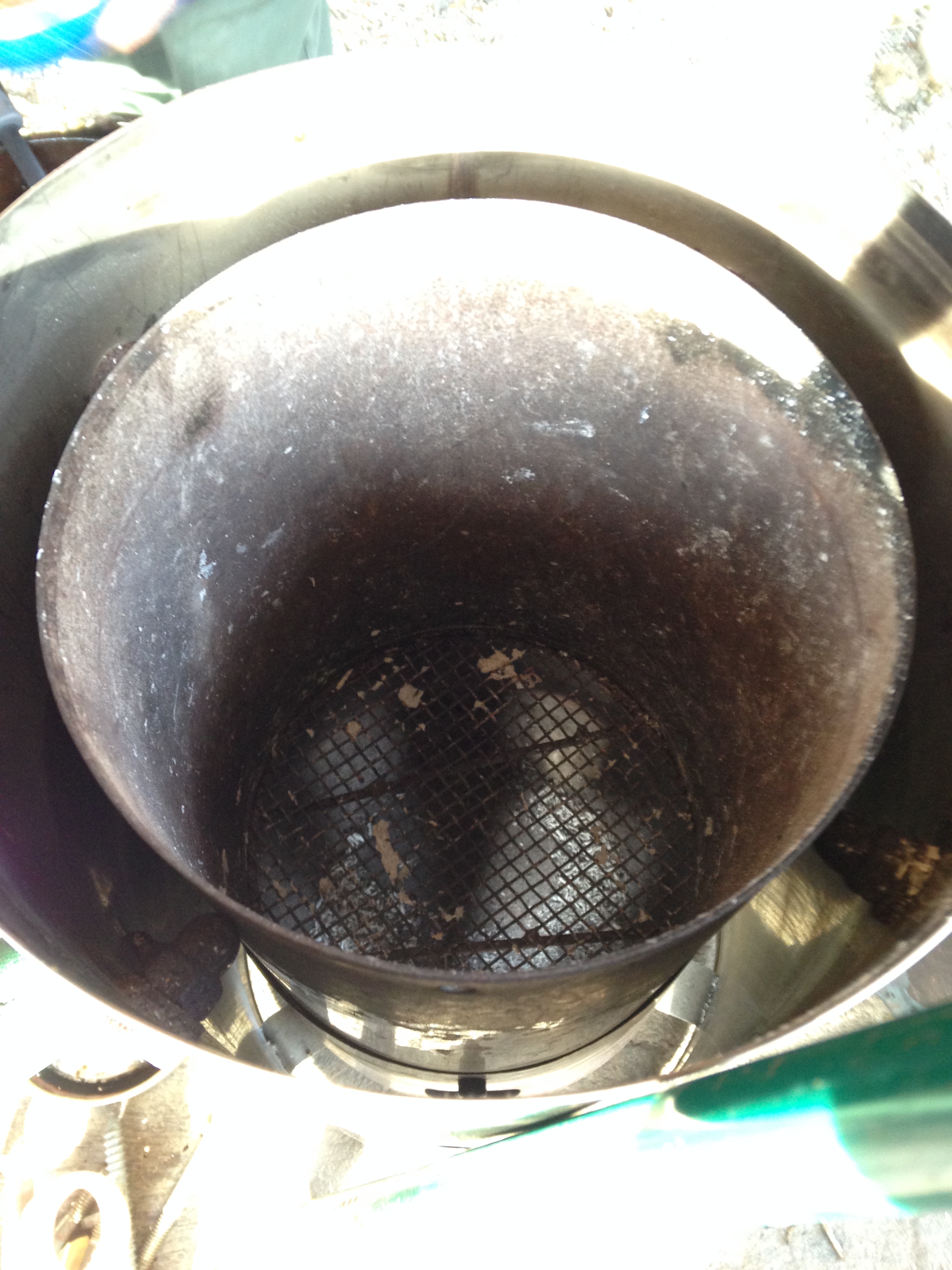
On November 8th, at Awbury Agricultural Village, Dale Hendricks gave a class titled Biochar – A Climate Change Solution?  The $25 class started with a lecture about biochar, what it is, and what role it can play in building healthy soils and sequestering carbon.  Following the presentation, Dale demonstrated how to set up two different size biochar stoves used for producing biochar, and cooking.  We heated up some delicious chili that Dale brought, and some hot chocolate that another class participant brought to share.  It was a great opportunity to learn about this great technique, and to meet other people who share the interest in creating healthy soil.  Biochar is created by burning organic matter, and then as the flames start to die down and the burning material is glowing, you smother the fire with more material to turn into biochar.  This deprives the glowing coals of oxygen, resulting in biochar.  A primitive way to accomplish this is to dig a large hole, burn a bunch of wood in the hole, and continuously smother the fire with more material to burn.  When the fire is eventually put out with water, and the coals cool down, you’re left with biochar.  Apparently some native cultures used to do this (likely cooking over the fires), and the soil in those areas has an extremely high carbon content, making rich soils that produce better yields compared to nearby farms without this carbon in the soil.

IMG_5893  IMG_5894

Biochar is essentially carbon.  If you remember from chemistry class, diamonds are also composed of carbon, but in a much more dense molecular structure.  Biochar is carbon like you might see in the tip of a graphite pencil, or in activated carbon in water filters or in fish tank filters.  A Carbon atom has four loose electrons that make it want to “grab onto” other molecules nearby.  For this reason, it is used to filter water.  In a garden, biochar is used to “grab onto” nutrients, and hold them in the soil.  These nutrients don’t get stuck forever in the biochar, however.  They are slowly made available to plants.  Biochar acts as a method to slow nutrient runoff, and hold nutrients in the soil until plant roots pull them from the soil.  For this reason, biochar needs to be “charged” with nutrients before being added to the soil.  Otherwise, it will pull the nutrients out of your soil into the biochar, and your soil may be nutrient deficient until more nutrients are added.  Biochar can be “charged” with compost tea, nutrient solutions, or even urine.  One of Dale’s suggestions was to fill a bucket with biochar, and pee in it.  The resulting biochar will be full of nitrogen for your garden.

IMG_5895 IMG_5896

Biochar is also very porous, meaning it has tons of small pockets of air which increases the surface area available to hold nutrients.  These pores are also an ideal environment to trap water, and for bacteria and fungi to live.  Biochar creates a habitat for beneficial soil life, and increases the water-holding capacity of the soil.  After creating biochar, the result is large chunks of charcoal, which are then crushed to increase the surface area.  You don’t want to put large chunks of charcoal into the soil, although worms apparently will munch on the biochar to help their digestion.  Biochar can be crushed by wrapping it in a tarp, and driving over the tarp with your car.

IMG_5898


The end product, chunks of charcoal to be made into biochar

Biochar also sequesters carbon into the soil, and holds it there for long periods of time.  The carbon which makes up the organic molecules in trees and plants comes almost entirely from Carbon Dioxide in the air.  When this tree and plant material is converted into biochar, and put into the soil, this is an effective way of putting carbon from the atmosphere into the soil, where it can be stored for long periods of time.  As many permaculturists will tell you, the key to soil health is increasing the amount of organic matter in the soil.  Using biochar is one way to accomplish this.

In the class, Dale stressed that biochar is not the ultimate solution to climate change and healthy soil.  Rather, this is one technique that, when used appropriately, can have great benefits to the environment and to the soil.  You may be saying to yourself, “That sounds great!  Should I be making and using biochar?” Like all things in permaculture, the answer to that question is, it depends.  Turning wood and organic material into biochar is just one use for this input.  Composting is another important technique for using this material.  Creating biogas is another solution. (Biogas is created by capturing the methane released from anaerobic digestion of organic material.  Essentially, composting without air creates methane that can be captured and used like natural gas to create heat and electricity.)

IMG_5897


From the event page:

Dale has been growing and propagating plants professionally since 1975. In 1988 he co-founded North Creek Nurseries, Inc in order to propagate and grow perennials and grasses with an emphasis on natives and garden selections of natives. He has been honored with the American Horticulture Society’s Individual Commercial award and the Perennial Plant Association’s Young Professional award. He has taught plant propagation at Longwood Gardens and lectures widely. He served on the founding board of the Sustainable Business Network of Greater Philadelphia and as co-chair from 2004-2007. Dale also served on the founding Steering Committee for the Native Plants in the Landscape Conference at Millersville University.

In 2008 Dale founded Green Light Plants, LLC to consult on sustainable and fecund landscapes and to grow native, woodland and Permaculture plants renewably, organically and joyfully.

Dale lives with his family, gardens and makes biochar whenever he can in Landenberg, Pa.

Hazmat / Nuke / Chem / Bio Emergency Saftey Class

Being self-sufficient doesn’t mean just taking care of food/water/shelter in times of abundance.  It also means being able to take care of yourself and your loved ones in an emergency situation.  I’m not talking about all-out doomsday preppers, but at least being exposed to some safe practices following emergency situations.  During Hurricane Sandy, my apartment lost power for a few days.  Luckily, we were decently prepared for that short-term event, but if anything ever happened that knocked out electricity, water, or gas, we wouldn’t have been prepared to take care of ourselves for more than a week or two, if that.  Exposing yourself to certain knowledge before an emergency can greatly increase your chances of staying safe in the following days and weeks.  This free class put on by Fernando of SurviveandthrivePhiladelphia.org and Will from PracticeSurvival.com was just that, a great intro-level exposure to some techniques that can be used to protect yourself in a situation where radiation, biological, chemical agents threaten public safety.

On November 9th, at the King of Prussia Firehouse, a few different groups co-organized a class on emergency safety for dangerous situations involving hazerdous materials, nuclear radiation, and dangerous biological, or chemical exposure.  The class was a basic overview of many techniques and tips to help increase your chances of staying safe in these dangerous situations.  It was taught by Fernando who runs SurviveAndThrivePhiladelphia.org, and Will from PracticeSurvival.com.  The class was very informative.  One of my favorite tips was for creating your own emergency survival toilet.  With a 5-gallon bucket, a trash bag, and a bag of cat litter, you can make a “litter box” style emergency toilet.

About 50 or so people attended the class.  Did I mention that they had a full bar?  Not a bad way to spend a few hours on a Sunday afternoon.

IMG_5908 IMG_5909


Earthship Building Workshop in Bristol, PA

earthshipoviewsilverlake

Earthships are buildings that utilize passive heating and cooling to regulate indoor temperature, usually constructed from local resources.  For example, windows on sun-facing walls admit lighting and heating, and the buildings are often horseshoe-shaped to maximize natural light and solar-gain during winter months. The thick and dense earth-rammed tire walls, through varying amounts of sunlight and shade, provide thermal mass that naturally regulates the interior temperature during both cold and hot outside temperatures.  There are several eartships in Philly, and this one in Bristol is close to completion.

Workshop
Saturday, November 22, – 10:00 AM – to – 4:00 PM.
Sunday, November 23, – 10:00 AM to 4:00 PM.
Lecture
Saturday Evening Lecture emphasizing water.

Learn Earthship building techniques with an emphasis on Catchwater. Hands on activities include:

– Building a W.O.M. (Water Organizing Module)
– Building can walls.
– Plumbing and finish burial for the cistern.
– Stem wall insulation and weatherizing.

Tickets are $50 for both days, $30 for Saturday (plus the evening lecture), or $25 for just the Saturday evening lecture.

Tickets and more info here:

https://www.eventbrite.com/e/earthship-workshop-bristol-pa-nov-22-tickets-14008115651?aff=efbevent

A Food Forest in Philadelphia

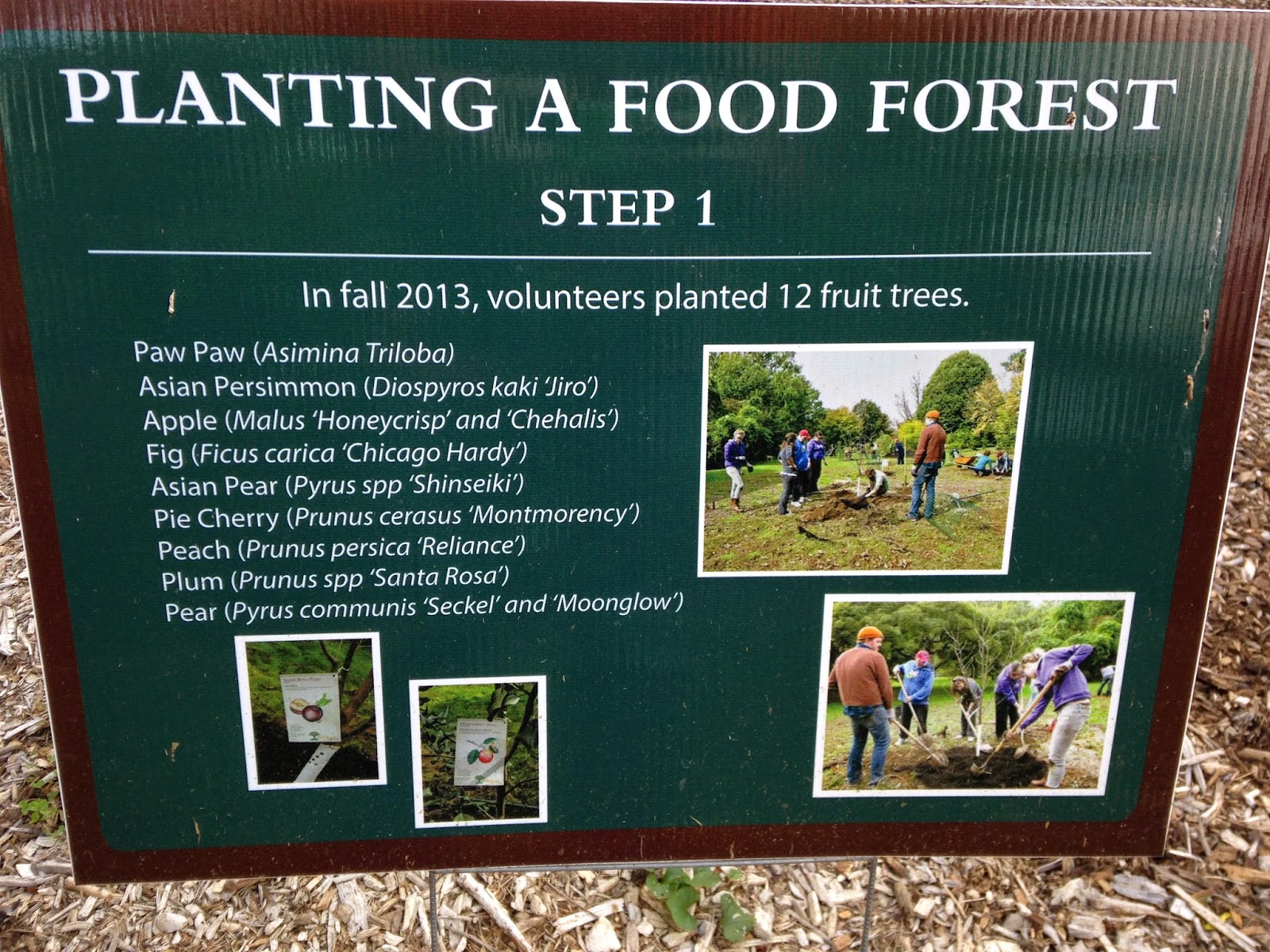
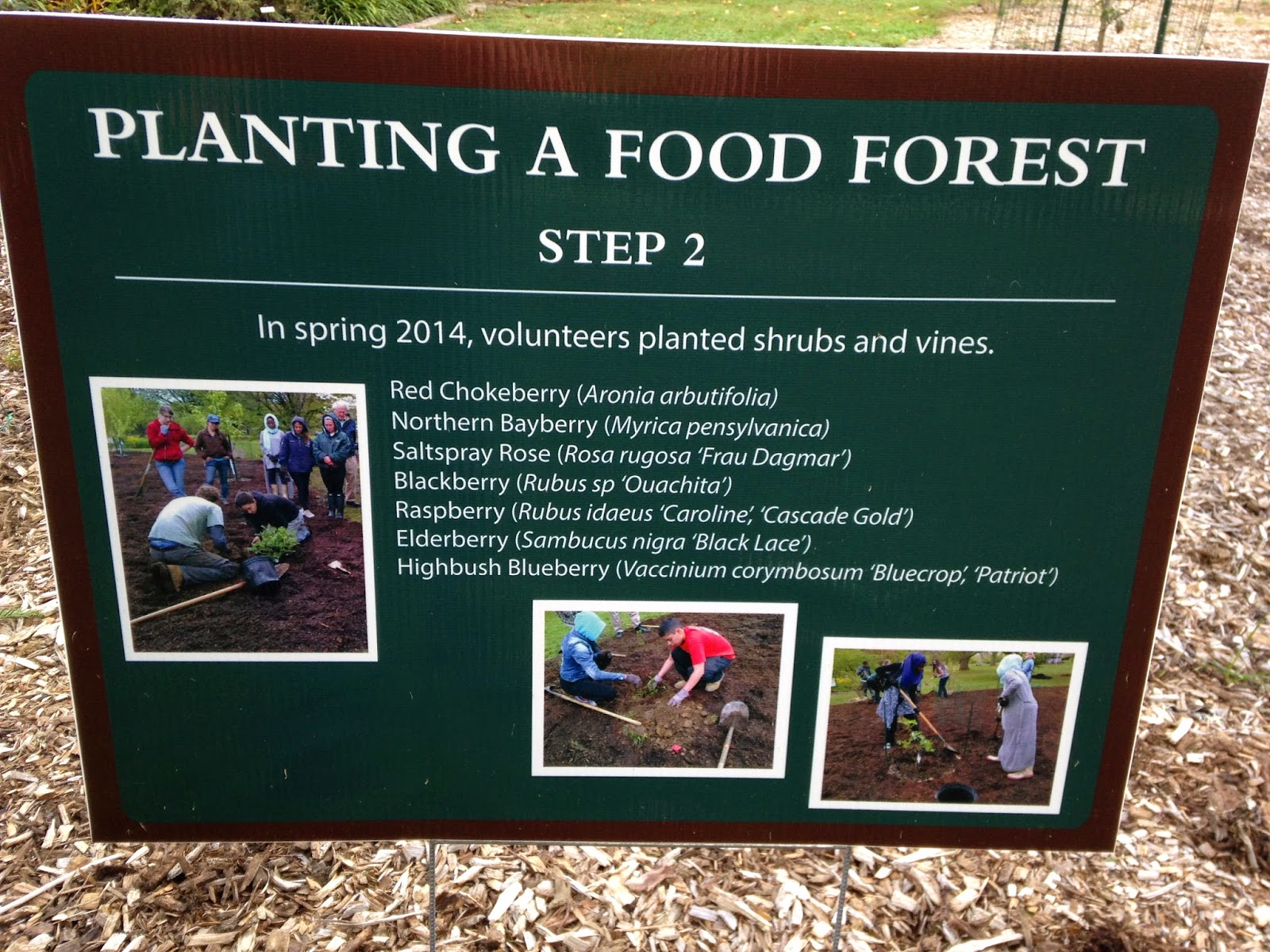
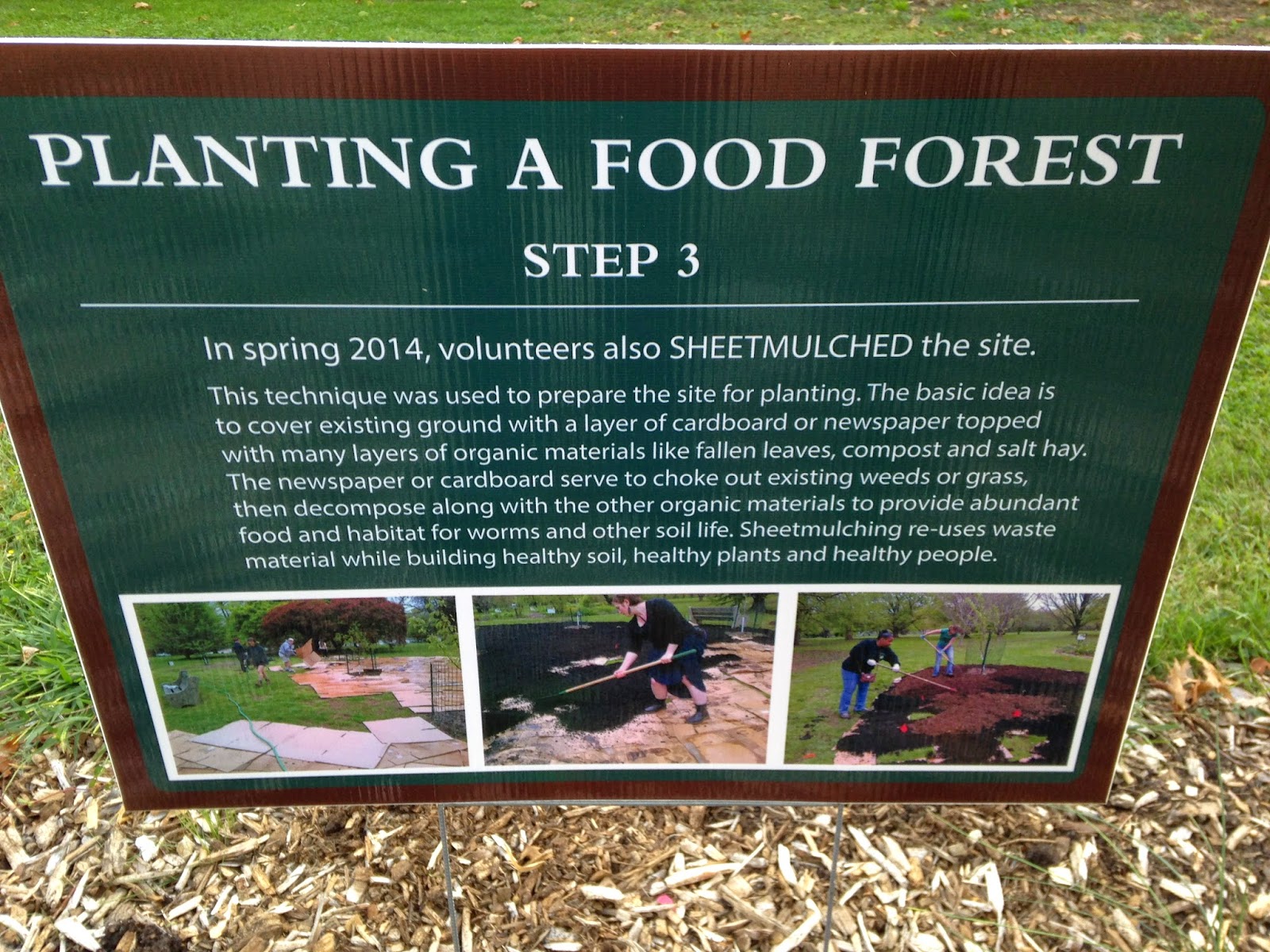
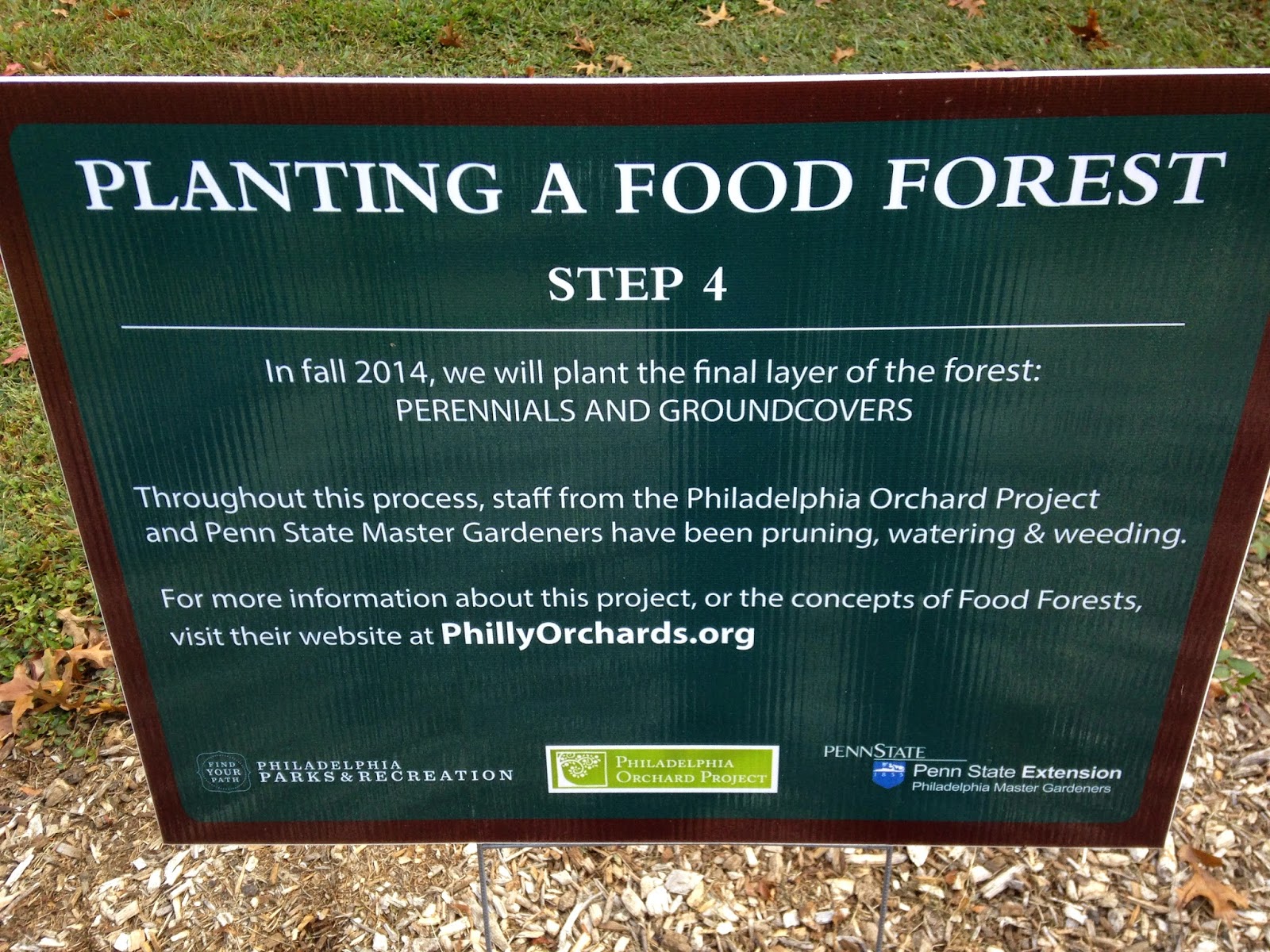
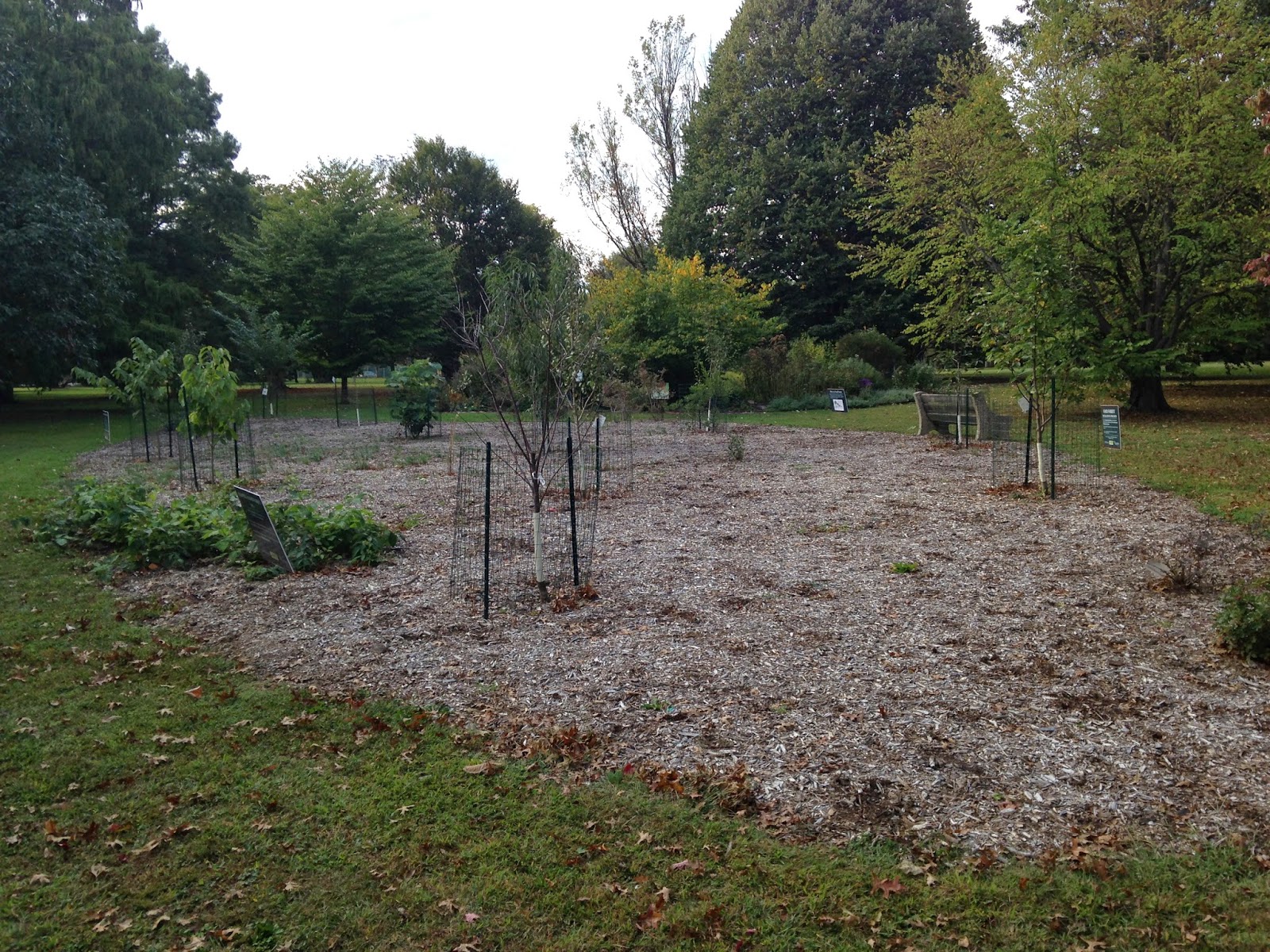
About a month ago, I was visiting the Shofuso Japanese house in Fairmount Park with my girlfriend when we stumbled upon a food forest right here in Philadelphia.  I’ve read about several Philly Food Forest plantings done by the Philly Orchard Project, but hadn’t seen any yet.  They had signs surrounding the site that described the process of installing the different aspects of the system.  Well done, Philly Orchard Project!  Check it out:

Wild Land Immersion Class

Update:  The Philadelphia class has been cancelled due to insufficient registration.  Another class will be offered in the Spring in Philadelphia.  Email susq.pc@gmail.com to be notified of the Spring class.

This looks like an awesome class for anyone who’s available on Mondays in Philadelphia, or Saturdays in Lancaster, Pa.

Wild Land Immersion: Philadelphia

Wild Land Immersion: Lancaster

1534826_10152346646002133_3547363024918236804_o

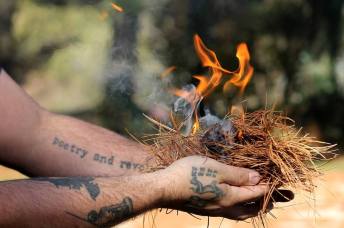
Learning ancestral skills is something that’s important for increasing your ability to be self-sustainable.  Our ancestors took care of their basic needs in ways that our current society has forgotten.  Leaning things like foraging for wild plants, creating fire, crafting tools and weapons, tracking, and hunting are all key to survival if you’re not relying on others in some way.  A big part about permaculture is forming ommunities, because it’s much more efficient to work as a team than to try to do everything yourself.  Classes like this are also a great way to meet like-minded individuals and start forming a network of friends.
The description of the class on the facebook page says the class will cover, “gathering wild foods and medicine, building debris-huts, animal tracking, fire-making techniques such as hand-drill and bow drill, making basic hunting implements such as a survival bow and simple traps, and much more!”

10295682_10203239440967729_8206324378976325758_n

This class is being taught by Ben Weiss and Wilson Alvarez.  Ben is a permaculture teacher from Lancaster County.  I took a 7-month long Organic Gardening class with Ben in the Summer of 2014, and I thought it was great.  I learned a ton of practical knowledge that I used in my garden, and I met a lot of smart people with similar interests.  Ben is a great teacher, and is very patient and thorough with his explanations.  I haven’t met Wilson Alvarez, but I’ve heard good things.  He’s “a permaculture designer, an inventor, gardener, skilled tracker, bowyer, nature-awareness instructor, and poet from Lancaster, Pennsylvania.”  This is definitely going to be a knowledge-packed experience.  I wish I could attend, but I work on Mondays, and Lancaster is a bit far for me.  If they have any Saturday classes in Philadelphia in the future, I’ll definitely be there.

The Philadelphia class is 6 Mondays: November 24th, December 1st, 8th, 15th, 22nd, 29th.  Every class runs from 10AM-4PM.

The Lancaster class is 6 Saturdays: November 22nd, December 6th, 13th, 20th, 27th, & January 3rd (January 10th postponement date in case of bad weather). Every class runs from 10AM-4PM.

The cost for the classes is $236, and the class requires a minimum of 4 students.

Email susq.pc@gmail.com to register.

POP Plant Sale and the start of a Backyard Forest Garden

POP Plant Sale and the start of a Backyard Forest Garden

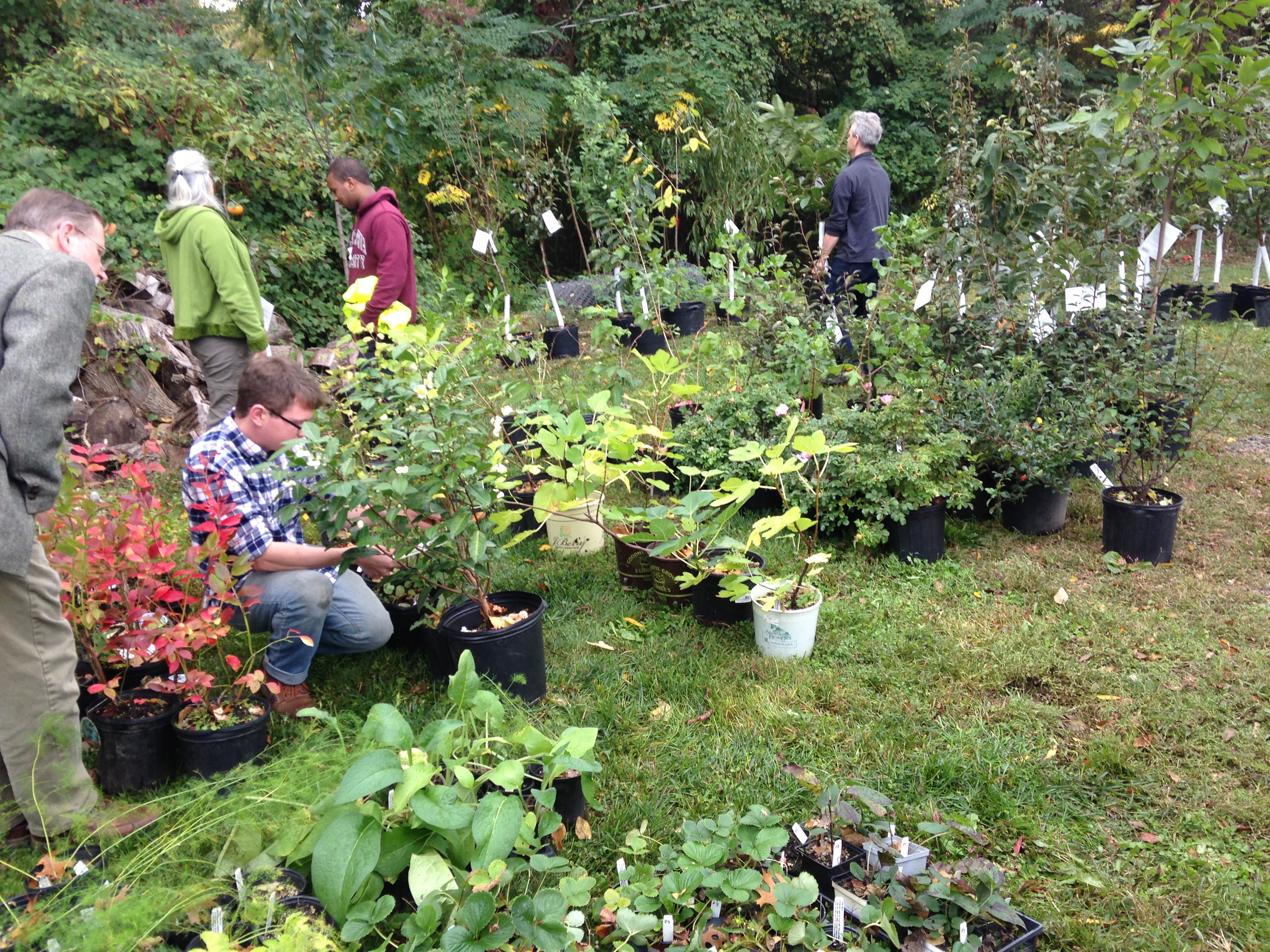
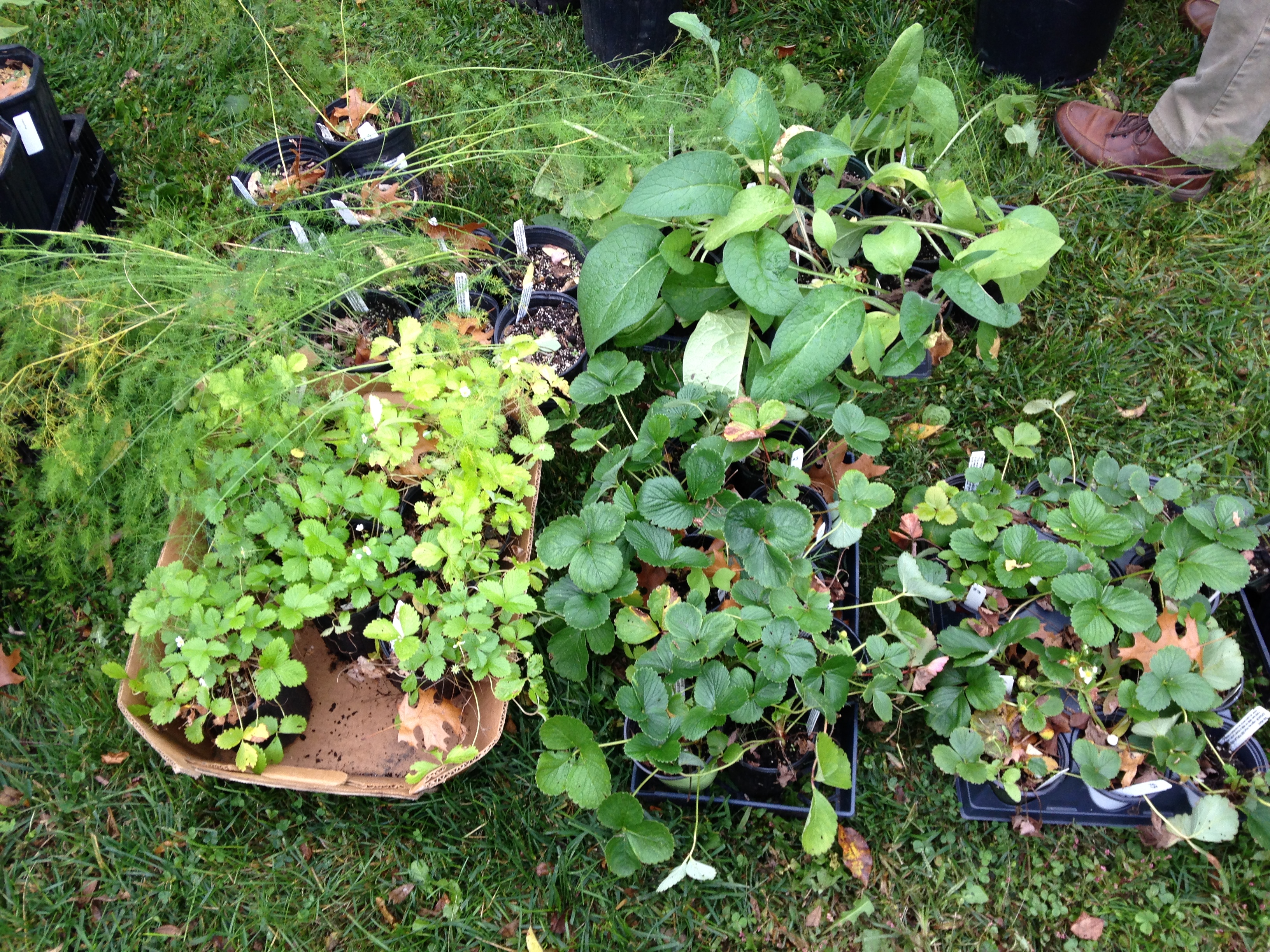
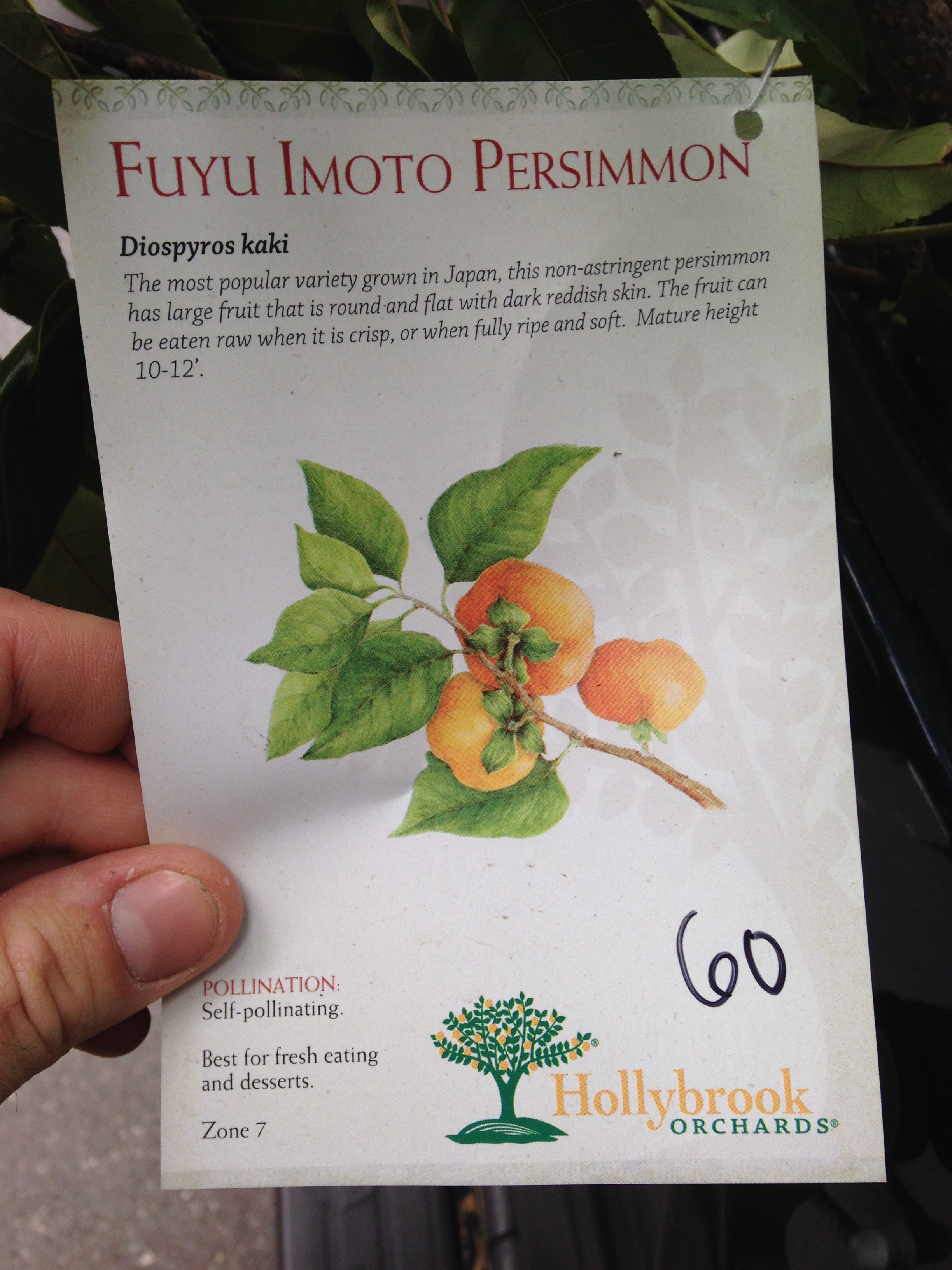
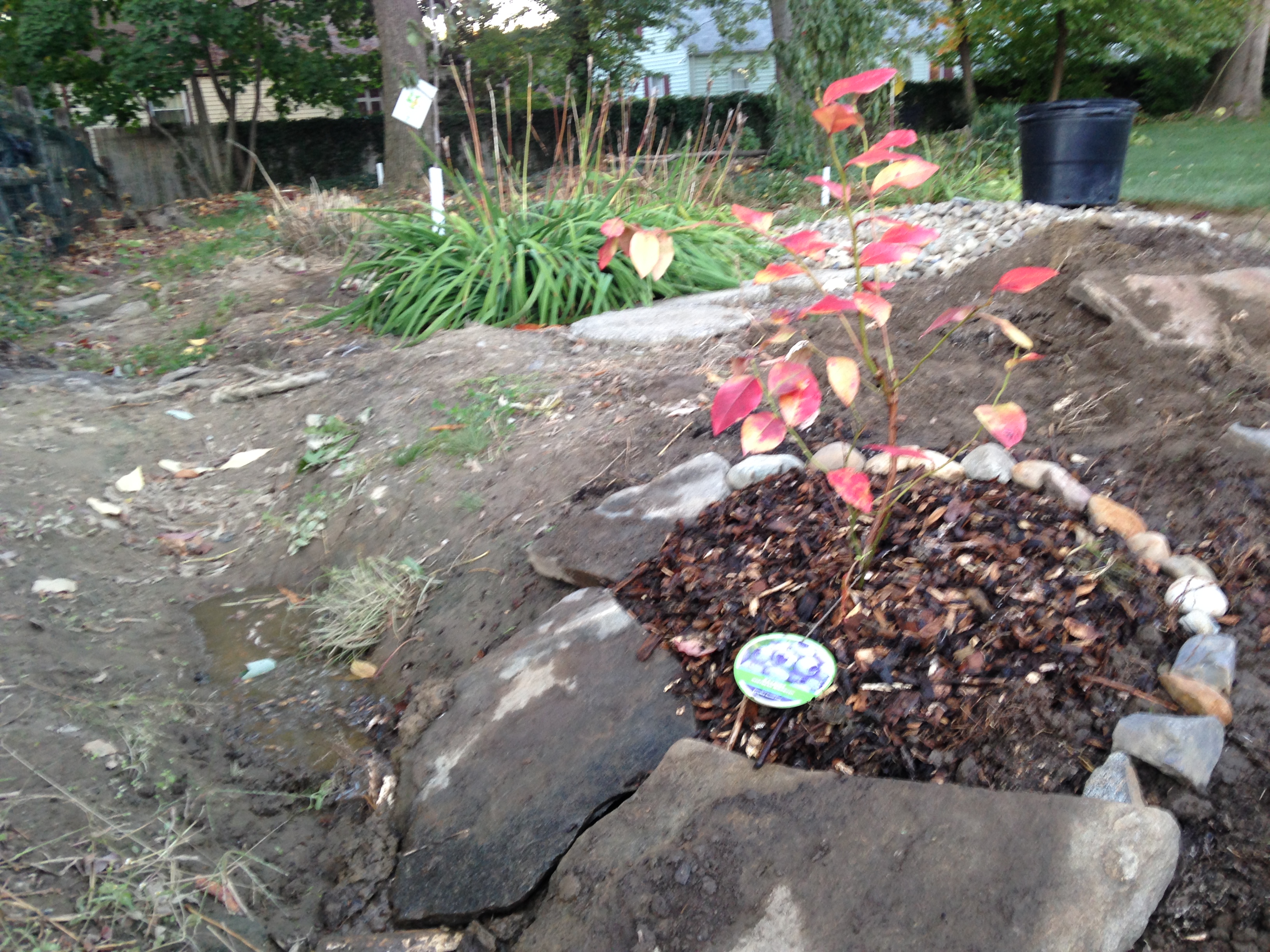
The Philadelphia Orchard Project’s plant sale happened a few weeks ago.  They had a free fruit tree giveaway to the first 15 people to arrive, so I got my buddy Miles to come with me and we got two fruit trees!  We got a Fuyu Imoto Persimmon and a Reliance Peach tree.  I also bought a small Blueberry bush, a Pawpaw seedling, and a strawberry plant with white, extra tasty strawberries.  I also got to meet Phil Forsyth for the first time.  He’s the guy that started the Philly Orchard Project, definitely a guy that I look up to.

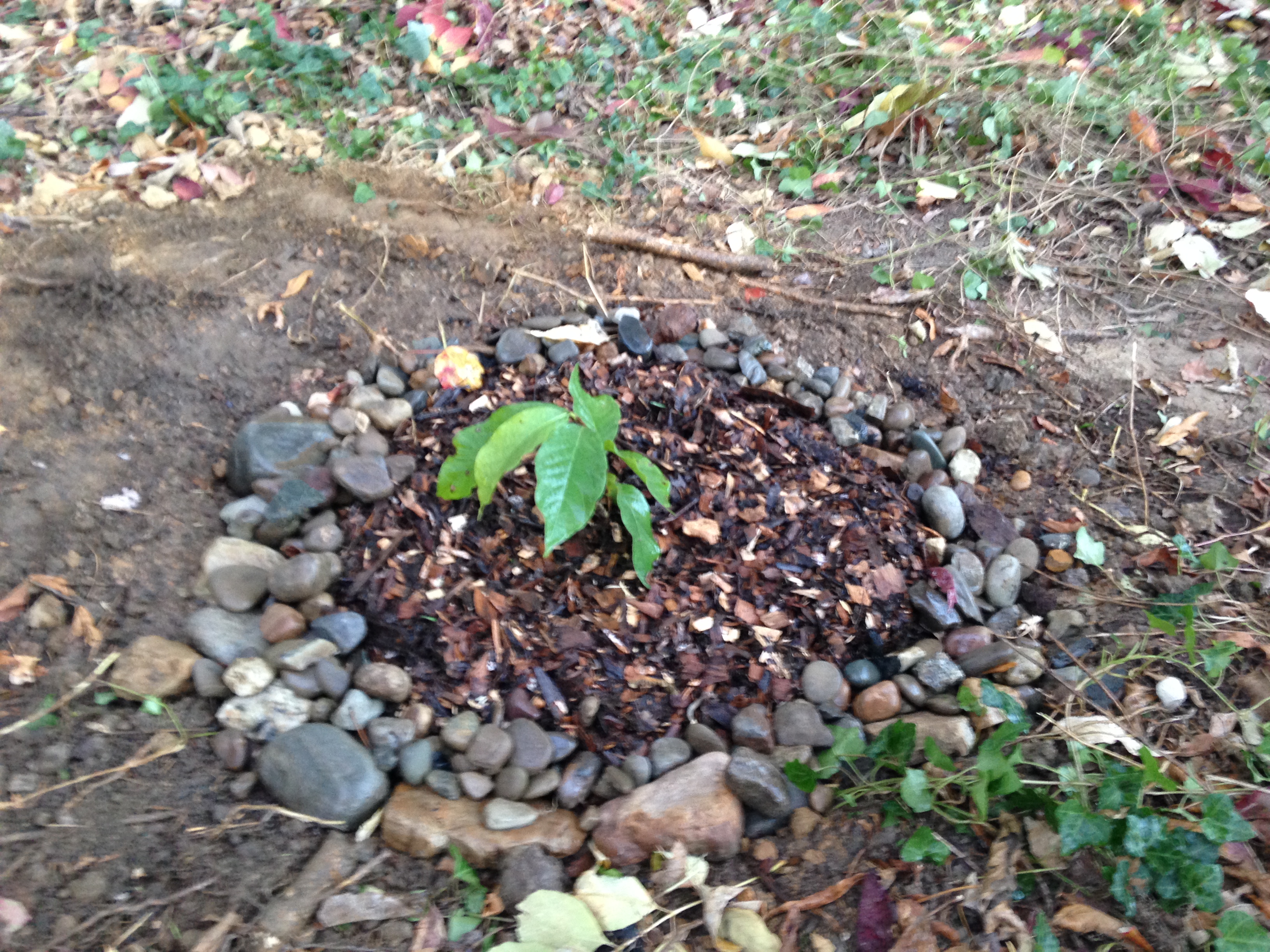
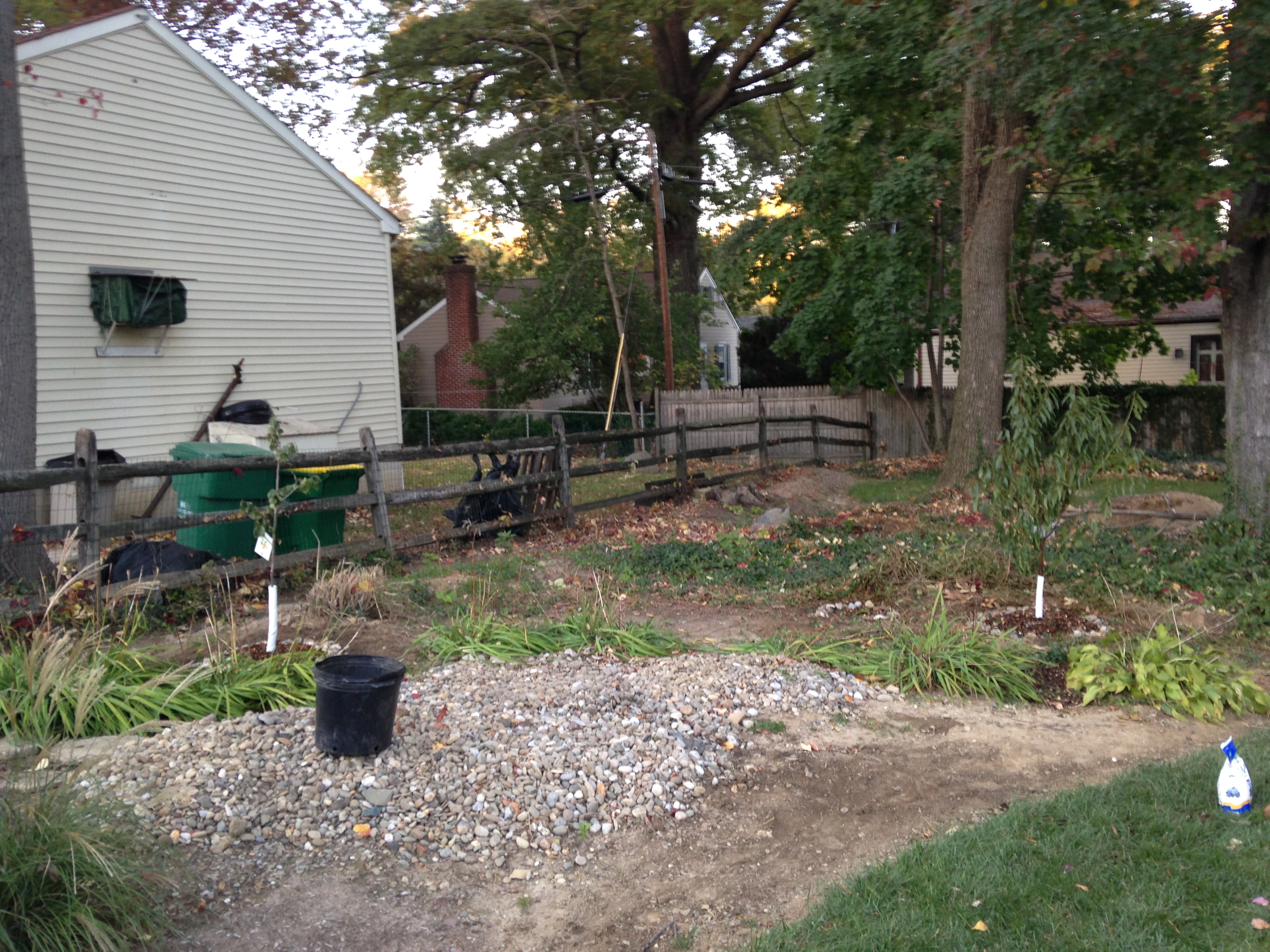
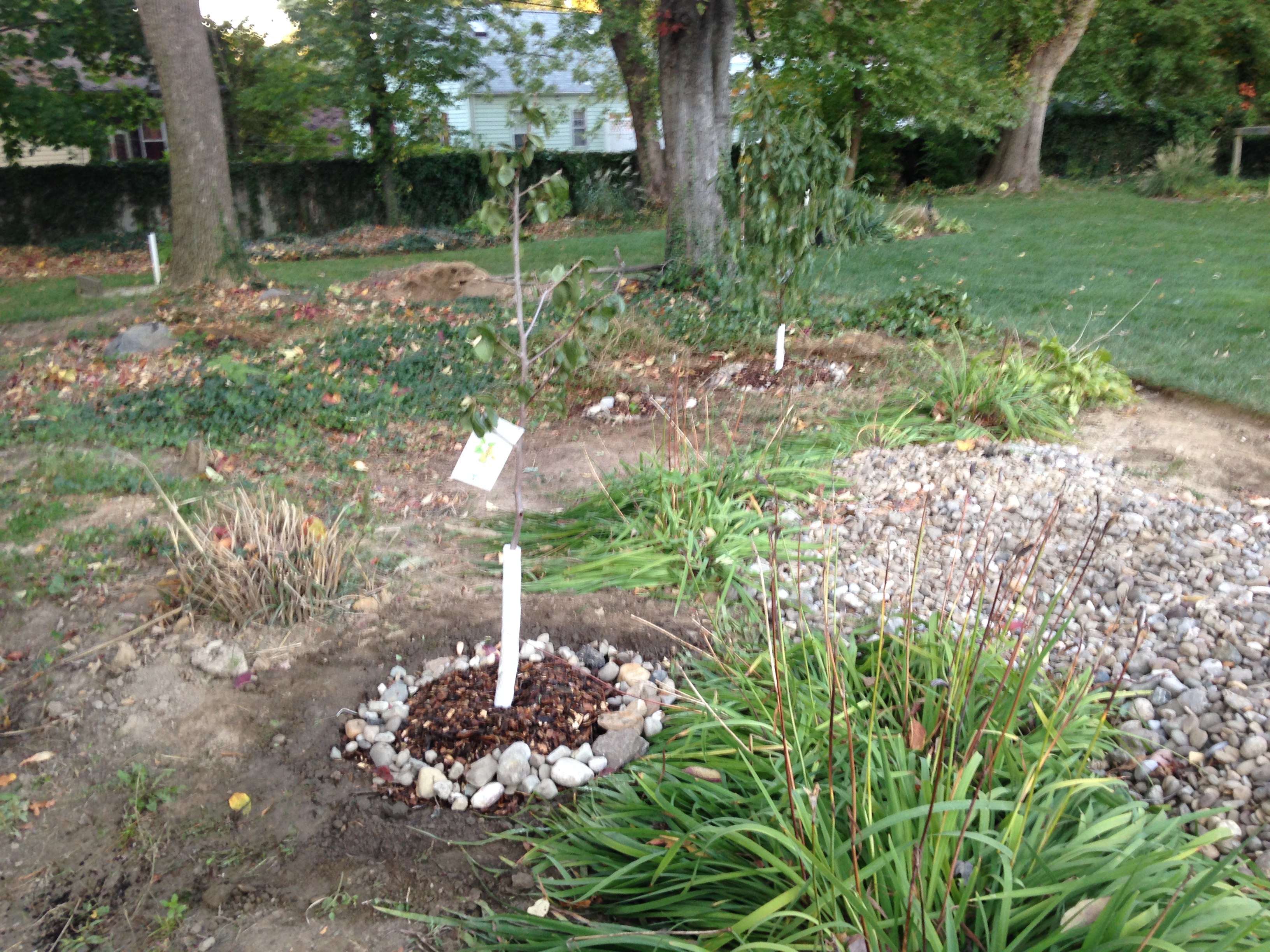
I planted the trees and the shrub at my parents house to start a food forest garden there.  I also had a comfrey plant that I got from a friend.  My buddy had some planting soil with mycorrhizal fungi, so I used that to surround the roots of the tree.  Here’s some photos.  Some of them are blurry, sorry!

IMG_5639

Our loot from the plant sale and tree giveaway!

IMG_5640

Miles was excited for the event.

IMG_5644

All the perennials for sale!

IMG_5647

Some more plants for sale.IMG_5648

IMG_5637

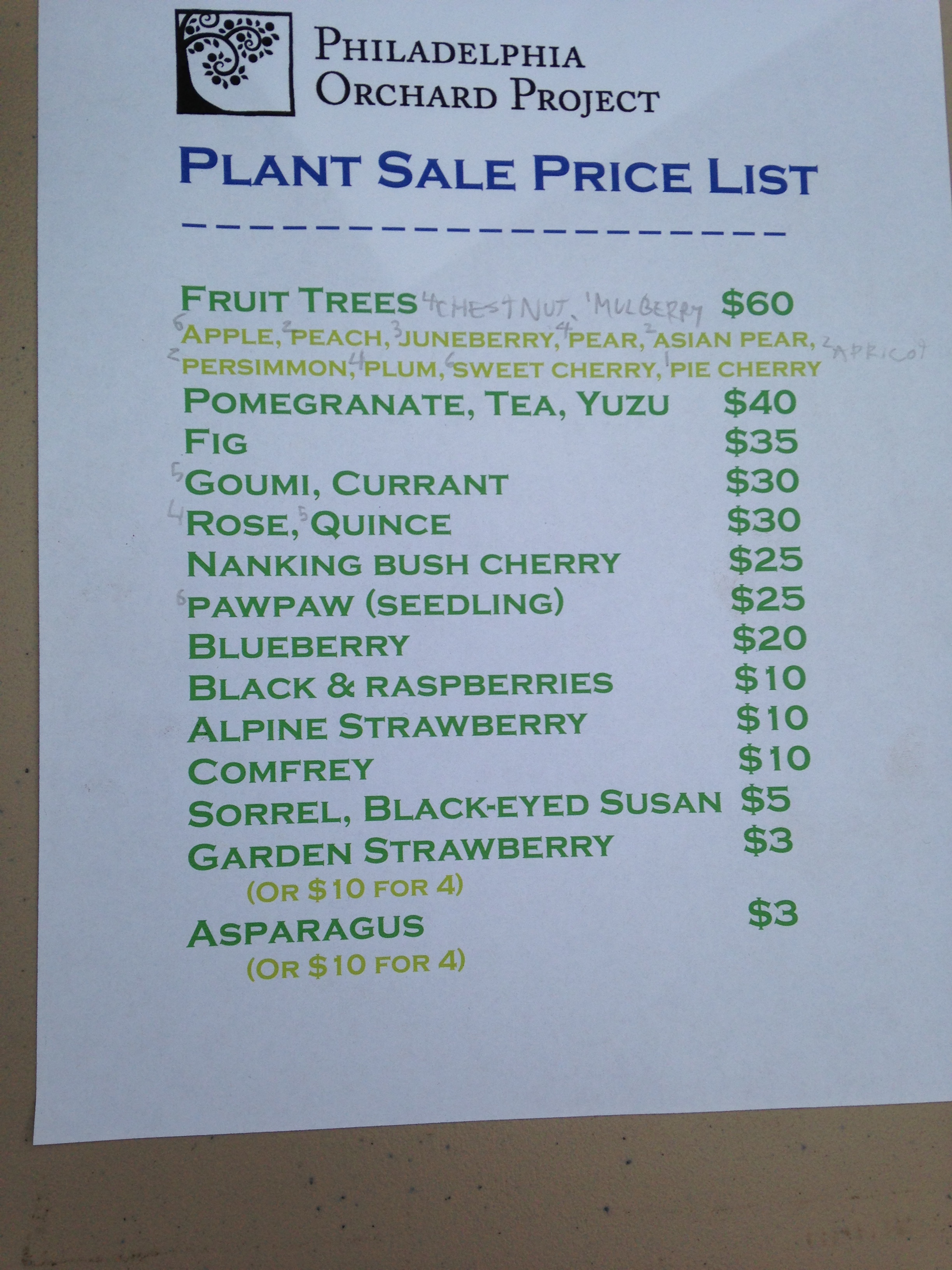
Price List. We made out pretty good getting two fruit trees for free!

IMG_5649

The Persimmon Tree we planted.

IMG_5651

The Peach Tree we planted.

IMG_5667

Pawpaw seedling

IMG_5668

This is the area of the yard where I’m planting the forest garden. There are some taller canopy trees, but the Persimmon, Peach, and Blueberry will get plenty of sunlight. The Pawpaw will be a bit shadier when it grows, but it can handle that.

IMG_5666

The Peach tree, and a comfrey plant.

IMG_5665

Persimmon Tree

IMG_5664

Blueberry bush next to a drainage ditch.